Ships from the USA!
Say Hello to Glass Skin
Authentic K-Beauty, U.S. Stock
K-Beauty, Delivered Fast
U.S. Warehouse Shipping
100% Authentic Products
Top Korean Brands Only
Glow. Hydrate. Repeat.
Stay Ahead of Beauty Trends
Ships from the USA!
Say Hello to Glass Skin
Authentic K-Beauty, U.S. Stock
K-Beauty, Delivered Fast
U.S. Warehouse Shipping
100% Authentic Products
Top Korean Brands Only
Glow. Hydrate. Repeat.
Stay Ahead of Beauty Trends
You know how tough it is when your skin is sensitive to nearly everything. A majority of masks hurt, turn red or simply worsen the situation. Nevertheless, Korean face masks for sensitive skin are made differently, and once you understand why, you will never again choose the first drugstore option.
K-beauty or Korean beauty has never attempted to concentrate on anything but peaceful, healthy skin at the beginning. The type of skin that it suits best is reactive, delicate, or easily irritated. Furthermore, the science behind the ingredients of K-beauty is truly amazing.
The protective wall of skin is your wall. It retains moisture and bars out irritants. The breaking of that wall results in a loss of water on your skin. This is referred to as TEWL (Transepidermal Water Loss). A TEWL value is high; your skin is tight, red and raw. It also leaves your so-called skin microbiome (naturally existing healthy bacteria living on your skin) totally off balance.
This triggers inflammation. The repeated inflammation breaks down collagen over time, and ages your skin more rapidly, which is what experts refer to as inflammaging. A good mask does not simply put on moisture. It aids in the reconstruction of your barrier, eases inflammation and defends your microbiome.
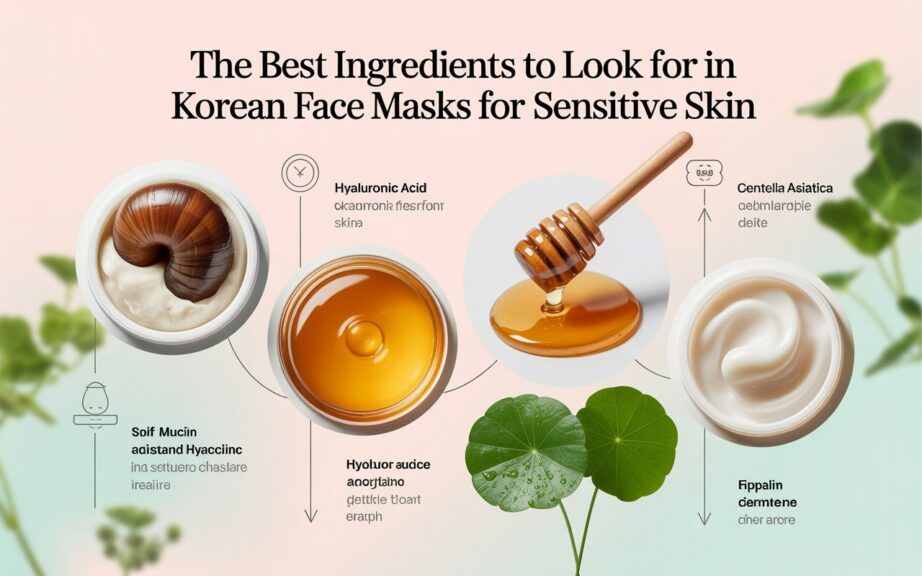
The Best Ingredients to Look for in Korean Face Masks for Sensitive Skin
This is what makes the difference between good and great K-beauty masks. You can always find these on the list of ingredients:
Centella Asiatica (Cica) is the holy grail of K-beauty soothing. It lessens redness and actively assists in healing damaged skin. Its highly concentrated extract, Madecassoside, accelerates the healing process and is commonly used in the clinical post-operative treatment.
Centella Asiatica (Cica) is the holy grail of K-beauty soothing. It lessens redness and actively assists in healing damaged skin. Its concentrated extract, Madecassoside, accelerates recovery and is popular in medical after-surgery treatment.
Panthenol (Pro-Vitamin B5) is highly moisturizing and non-irritating. It calms down aggravated skin and enhances elasticity without blocking pores.
Heartleaf ( Houttuynia Cordata ) is an up-and-coming K-beauty. It regulates surplus oil, as well as soothes combination-sensitive skin without drying it up.
Ceramides are lipids that are identical to those found in the skin, which, in other words, fill in the crevices in your broken barrier. They are vital in repairing barriers and decreasing TEWL.
Beta-Glucan is even more hydrating than hyaluronic acid. It also soothes the immune reaction of your skin and that is what sensitive skin needs.
Allantoin cures and soothes swollen skin. It is mild enough to be used on the most sensitive skin.
Squalane is a non-comedogenic, lightweight oil that resembles the natural sebum of your skin. It fixes the moisture without clogging pores ever.
In addition, most high-quality Korean masks incorporate liposome delivery systems. In this technology, the active ingredients are enclosed in small protective bubbles. The ingredients are brought further into your skin by those bubbles, and thus are effective, rather than sitting on the surface.
These ingredients are always ranked in the first place in Hwahae rankings, the most reliable skincare rating system in Korea. You can shop by ingredient and Hwahae-rated products at koreanbeautybar.com.
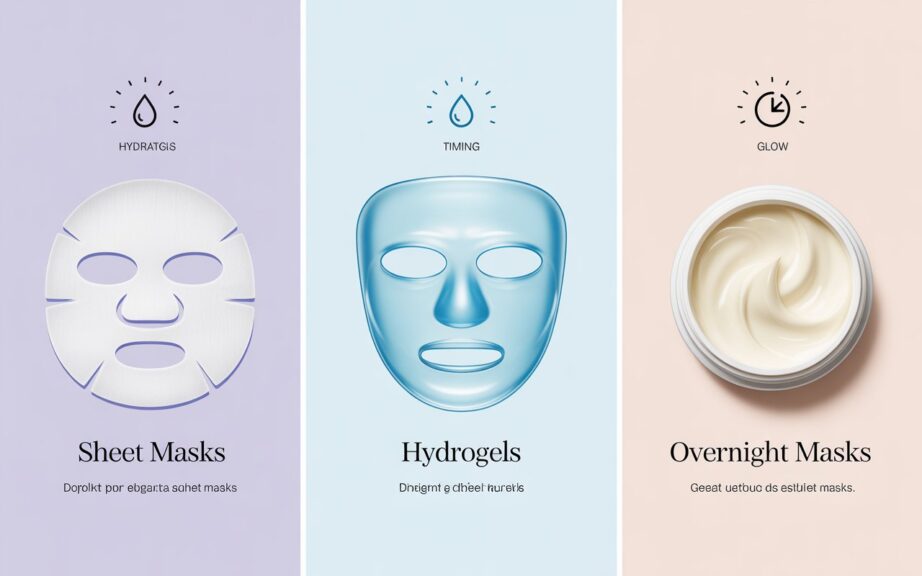
Sheet Masks, Hydrogels, and Overnight Masks — What’s the Difference?
Not all masks work the same way. We can take a simple breakdown:
Korean Sheet Masks are impregnated with serum essence and have varied fabric types that include cotton, microfibre or Cupra sheet (a super soft viscose fabric that fits the face like a glove). You have them on for between 15 and 20 minutes, then wipe off the rest of the essence. They are terrific as fast, apparent soothing. You can use the korean face masks for glowing skin as well.
Bio-CelluloseMasks are made from fermented coconut fibre. Bio-cellulose is like a second skin and penetrates ingredients way deeper than ordinary sheet masks. It is a popular post-laser recovery choice and redness-prone skin.
Hydrogel Masksare gel-like in nature and are very tight at locking in moisture. They are extremely cool to the hot or inflamed skin and are ideal in summer or after sun exposure.
Overnight Masks (also called sleeping packs) are applied as the last step in your nighttime routine and rinsed off in the morning. These are the best choices for overnight masks for damaged skin barrier repair, because your skin regenerates most during sleep.
In the case of Korean sheet masks for rosacea-prone skin, look for fragrance-free ones with mugwort or centella. These reasoned and cool capillaries that are reactive do not cause a flare. Browse additional selections on koreanbeautybar.com.
How to Use Korean Face Masks the Right Way
The most superior mask will not be of any use when you wear it the wrong way. Follow these steps:
Wash your face with a pH-balanced, mild cleansing product. Do not use foaming or fragrantly added.
Use a moisturizing toner/essence. This gets your skin ready and better absorbs the mask.
Wipe the mask on your face, rubbing it around the chin and nose.
Allow it to run 15-20 minutes. Do not leave sheet masks on overnight, especially when they become dry they can actually draw moisture back out of your skin.
Take off the mask and rub in the rest of the essence. Do not rinse.
Seal everything in with a gentle moisturiser or overnight sleeping pack.
Another tip to add to your skin cycling is the use of masks. Apply a relaxing sheet mask to your recovery nights following retinol or exfoliation. This is a balance between active and calm, barrier-repair nights and sensitive skin truly cherishes the balance.
Due to your sensitive skin, a small patch test is always advisable. Put a small amount on your inner wrist and allow it to dry for 24 hours before putting it on your face.
Korean Face Masks for Rosacea, Post-Laser, and Damaged Barriers
Korean Sheet Masks for Rosacea-Prone Skin
Skin of rosacea is hyper-reactive. It blushes and reddens so readily. Thus, you should find hypoallergenic masks, those that do not contain any fragrances, and non-comedogenic ones. Find certified formulas under the label EWG Green Grade; they are certified by independent testing as safe on reactive skin types.
Mugwort (Artemisia) and Centella asiatica are the most suitable of the best activities in rosacea. Both relax and actually make capillaries appear redder. To enhance the relaxing effect, store your mask in the refrigerator.
Such brands as Bloom Skin and other redness-first K-beauty brands are dedicated to formulas that are based on these actives. A carefully edited assortment is available at koreanbeautybar.com.
How to Soothe Redness After Chemical Peel
Your skin is in emergency recovery mode after a chemical peel or laser treatment. It requires moisture, barrier support and zero irritants. This is how to apply K-beauty masks at that sensitive time:
Allow at least 24 hours between applying any mask. Then select a bio-cellulose mask that has madecassoside or panthenol, which are the same as in clinical post-procedure skincare. At this stage, avoid anything containing niacinamide, AHA, BHA, or retinol. Wear the mask every day, 3-5 days during your post-laser recovery. A moisturiser with high ceramide content should be used to seal in the benefits.
Overnight Masks for Damaged Skin Barrier Repair
When your barrier is broken, your skin is always tightened, itchy and dry despite moisturising. Nevertheless, the correct overnight mask will help in a visible improvement in several nights.
Find sleeping packs with ceramides, beta-glucan, and squalane. The three are combined to replenish the lipid structure of your barrier, decrease TEWL, and soothe current inflammation. Use as the last step of your night routine daily for the next week. Within a few days, most of the people will noticeably wake up with much softer, calmer skin.
What to Always Avoid If You Have Sensitive Skin
It is important to know what not to use. Never use masks with synthetic fragrance or perfume, alcohol denat., essential oils such as lavender or citrus, high levels of AHA or BHA and artificial dyes or colourants.
Even more, the fact that a given product is labelled as natural does not imply that it will not harm sensitive skin. Numerous natural ingredients are, in fact severe allergens. Look at the complete list of ingredients prior to purchase.
Frequently Asked Questions
How many times can I use Korean face masks for sensitive skin?
Two to three times a week is the perfect usage time. But when your barrier is broken, or you are actively healing up, there is no harm in wearing an ultra-soft, no-smell mask daily.
What is the best Korean face mask for sensitive skin with rosacea?
The mugwort or centella asiatica with a bio-cellulose or Cupra sheet base is used in the best Korean face mask for rosacea. Find EWG Green Grade, fragrance-free products.
Is it possible to use a Korean sheet mask every day?
Yes, it is usual and safe to go through with sheet masking in the Korean culture of skincare. All one needs to do is stick to soft, barrier-friendly formulas and not wear the mask with exfoliating acids daily.
What is bio-cellulose in a Korean mask?
Bio-cellulose is a natural fibre that is produced by bacterial fermentation, typically of coconut water. It is made in a thin sheet resembling skin that is tight and fits closely on your face and provides ingredients deeper and more even than the standard cotton sheets.
Can Korean masks be used in case of a chemical peel?
Yeah, but do not till at least 24 hours. After that, a bio-cellulose or hydrogel mask with madecassoside or panthenol is ideal to soothe redness after chemical peel procedures. Do not have any mask with active exfoliants until your skin is completely healed.
Final Thoughts
Sensitive skin is overwhelming. But Korean face masks for sensitive skin do not follow this line at all. They are centered on reconstructing, healing, and safeguarding, rather than disrobing and scented.
When you know what actually happens to be required of your skin, barrier repair, decreased TEWL, and the appropriate calming actives, selecting the correct mask becomes far simpler. Ingredients like centella asiatica, madecassoside, ceramides, and beta-glucan are your best friends. The masks in bio-cellulose, hydrogel, or Cupra sheet forms ensure that the corresponding ingredients are actually absorbed correctly.
You have rosacea, you need to recover after a chemical peel, or you just need to fix your broken barrier. Finally, there is the best Korean face mask for sensitive skin that was created just to fit your needs.
To discover more on koreanbeautybar.com, follow the hand-picked recommendations, truthful ingredient breakdowns, and Hwahae-ranked selections of each skin concern. Your skin has the right to get better and now you know where to begin.


 Korean Face Masks